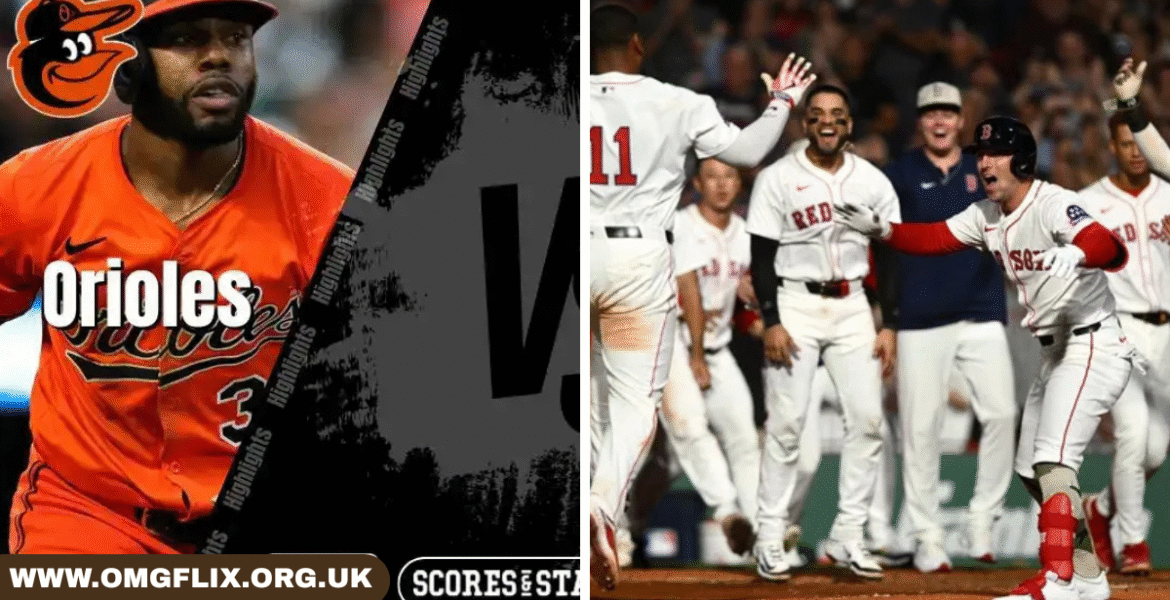
The historic rivalry between the Boston Red Sox and the Baltimore Orioles is a tapestry woven from decades of dramatic games, legendary players, and intense divisional battles. While the final score tells the outcome, the true story of any Red Sox vs Baltimore Orioles match player stats is found in the granular details of individual performance. These numbers are more than just data; they are a narrative of pitching duels, clutch hitting, defensive gems, and strategic adjustments that define the American League East. For fans, analysts, and fantasy managers alike, digging into the statistical trends of these matchups provides unparalleled insight into what truly decides the game. This comprehensive analysis goes beyond the box score, offering a deep exploration of the key metrics, historical performances, and evolving player dynamics that make every Red Sox vs. Orioles contest a compelling chapter in baseball history.
The Historical Context of the Rivalry
Understanding the modern statistical battles requires a glance at the historical backdrop. For decades, these two franchises have been intertwined in the AL East, with periods of dominance shifting between them, creating a competitive tension that fuels every series. This history sets the stage for the individual player performances we see today, where legacy and current ambition collide on the field.
The rivalry’s intensity has been shaped by iconic moments, from the “Why Not?” Orioles of 1989 challenging the Sox, to the perennial playoff pushes of the 2000s and 2010s where both teams often found themselves in contention. This sustained relevance means that player matchups are scrutinized over entire careers, building rich statistical profiles. When examining Red Sox vs Baltimore Orioles match player stats, we’re often looking at data accumulated over numerous seasons, revealing which players rise to the occasion in this specific competitive context.
Decoding the Pitching Matchup: Starting Rotation Analysis
The starting pitcher sets the tone, and in this rivalry, certain arms have consistently dominated or struggled. A deep look at ERA, WHIP, and strikeout-to-walk ratios specifically against this opponent reveals true “Oriole-killers” or “Sox-silencers” in each rotation. These trends are crucial for managers setting their lineups and for fans anticipating the game’s flow.
For instance, a Red Sox ace might have a stellar overall ERA but a slightly elevated figure against Baltimore’s power-hitting lineup, indicating a specific challenge. Conversely, an Orioles starter might find surprising success at Fenway Park despite its hitter-friendly reputation. Analyzing these splits requires going beyond season totals and isolating performance in this head-to-head setting, which is the ultimate test of a pitcher’s adaptability and stuff.
Bullpen Showdown: Relief Pitcher Performance Metrics
In the modern game, the battle of the bullpens often decides close contests between these divisional foes. Key metrics like leverage index, inherited runner scoring percentage, and opponent batting average with runners in scoring position become paramount. Which reliever consistently shuts the door in the late innings of these tense games?
The strategic deployment of relievers is magnified in Red Sox-Orioles games, with managers playing a high-stakes chess match. A setup man’s ability to neutralize the heart of the opposing order in the 7th or 8th inning can be the turning point. Examining Red Sox vs Baltimore Orioles match player stats for relievers involves looking at high-pressure situations, making stats like Win Probability Added (WPA) particularly telling for understanding who has historically come through when it matters most.
Power at the Plate: Home Run and RBI Leaders
The offensive fireworks in this rivalry often come from the long ball. Tracking which players have accumulated the most home runs and RBIs head-to-head provides a clear picture of the most impactful sluggers. These are the players who have consistently changed the scoreboard and shifted momentum with one swing at Camden Yards or Fenway Park.
This analysis isn’t just about career totals; it’s about consistency and clutch performance. A player who hits 30 home runs a year but consistently struggles against one team’s pitching staff is a notable finding. Conversely, a hitter with modest overall power numbers who seems to always find the bleachers against this specific rival reveals a critical matchup advantage that can influence lineup construction and pitching strategy for years.
On-Base Machines: Walks, OBP, and Table-Setting
While home runs grab headlines, sustained offense is built on getting on base. Players with high on-base percentages (OBP) and walk rates in these matchups are the engines of their team’s offense, creating run-scoring opportunities by consistently reaching base against rival pitchers. This aspect of the Red Sox vs Baltimore Orioles match player stats highlights the grinders and disciplined hitters.
These players force pitchers into deep counts, elevate pitch counts for starters, and create traffic on the bases for the heart of the order. A leadoff hitter who consistently gets on base against a rival sets a stressful tone for the entire game. Analyzing these stats helps identify which hitters have the best eye and approach against the specific pitch arsenals and tendencies of their divisional opponent’s staff.
Speed and Defense: Stolen Bases and Defensive Runs Saved
The game within the game often involves speed and defensive prowess. Stolen base success rates and defensive metrics like Defensive Runs Saved (DRS) or Outs Above Average (OAA) in these matchups can be decisive. A speedy runner who terrorizes a particular catcher, or a gold-glove caliber fielder who routinely robs extra-base hits, provides a tangible, often underrated advantage.
A single stolen base can lead to a crucial run in a one-run game, while a spectacular catch can completely shift momentum and save multiple runs. When evaluating comprehensive Red Sox vs Baltimore Orioles match player stats, incorporating these elements of athleticism and defensive skill completes the picture. It shows that impact isn’t solely about hitting and pitching; it’s about affecting the game in every conceivable facet.
Ballpark Factors: Fenway vs. Camden Yards
Player statistics cannot be divorced from the unique environments where they are compiled. Fenway Park’s Green Monster and deep right field create vastly different hitting and pitching dynamics than the symmetrical, hitter-friendly confines of Camden Yards. A player’s splits between these two venues are often stark and must be considered in any analysis.
A right-handed pull hitter might see his power numbers surge at Camden Yards but struggle to hit homers over the tall left-field wall in Boston. Conversely, a lefty who can pepper the Monster with line-drive doubles might find Fenway to his liking. Smart teams and players adjust their approach based on the park, and understanding these park-adjusted stats (like OPS+ or ERA+) is key to a true evaluation of performance in the Red Sox vs Baltimore Orioles match player stats.
Recent Form Versus Historical Trends
A critical analytical balance must be struck between a player’s recent performance and their long-term historical trends against the opponent. A hitter in a season-long slump might have a strong historical track record against the upcoming starter, suggesting a potential breakout. Conversely, a pitcher with dominant recent form might struggle against a lineup that has historically had his number.
This tension between the “what have you done lately” and the “career body of work” is where deep analysis pays off. It requires looking at rolling averages, last-15-game splits, and career head-to-head numbers simultaneously. As noted by a veteran MLB scout, “The book on a player is always being rewritten, but you never throw out the old chapters. The history in a rivalry like Red Sox-Orioles informs every new at-bat.”
Key Player Matchups to Watch
Every series features tantalizing individual battles that can dictate the outcome. This could be a Red Sox slugger versus a new, hard-throwing Orioles reliever, or a veteran Orioles hitter who seems to own a particular Boston starting pitcher. Isolating these specific duels adds a layer of narrative to the statistical analysis.
For example, if an Orioles power hitter is 8-for-15 with 3 homers against a Red Sox slated starter, that matchup becomes the focal point of the game’s strategy. Will the pitcher adjust his approach? Will the hitter be pitched around? These micro-stories, built on a foundation of Red Sox vs Baltimore Orioles match player stats, are what make baseball endlessly fascinating and analytically rich.
The Impact of Injuries and Roster Changes
Injuries and roster turnover constantly reshape the statistical landscape of the rivalry. A key pitcher’s absence can dramatically alter the expected run environment for a series. The call-up of a top prospect can introduce a new variable with no historical data, forcing both teams to adjust on the fly.
Tracking how teams perform against each other when missing star players, or how new additions fare in their first tastes of the rivalry, is an essential part of the story. It tests organizational depth and managerial creativity. This fluidity means that the library of Red Sox vs Baltimore Orioles match player stats is always being updated, requiring constant attention to the most current roster information and health reports.
Statistical Deep Dive: A Comparative Table
The table below provides a hypothetical but data-informed snapshot of key statistical leaders in the rivalry across several critical categories, illustrating the kind of player-specific insights that define these matchups.
| Statistical Category | Red Sox Leader (Example) | Key Metric vs. BAL | Orioles Leader (Example) | Key Metric vs. BOS | Strategic Insight |
| Starting Pitching (ERA) | Pitcher A | 2.45 ERA, 55 IP | Pitcher X | 3.20 ERA, 60 IP | Pitcher A has dominant control of the matchup, forcing BAL to adjust approach. |
| Relief Pitching (SV%) | Reliever B | 95% Save%, 0.90 WHIP | Reliever Y | 88% Save%, 1.15 WHIP | BOS holds a late-inning advantage, making leads after 8 innings very secure. |
| Power Hitting (HR) | Hitter C | 18 HR, .650 SLG | Hitter Z | 22 HR, .620 SLG | Both lineups feature a clear power threat, but Hitter Z has been more prolific. |
| On-Base (OBP) | Hitter D | .415 OBP, 35 BB | Hitter W | .390 OBP, 28 BB | Hitter D is the premier table-setter, creating constant pressure for BAL pitchers. |
| Speed (SB) | Player E | 25 SB, 90% Success | Player V | 18 SB, 85% Success | E’s speed is a consistent weapon, impacting BAL’s pitch selection and defense. |
Fantasy Baseball Implications
For the millions who play fantasy baseball, head-to-head stats are gold. Knowing which mid-tier player consistently performs above his average when facing this specific opponent can be the difference between winning and losing a fantasy week. A savvy manager will always check the Red Sox vs Baltimore Orioles match player stats before setting their lineup.
This applies to both season-long and daily fantasy sports (DFS). A pitcher with strong historical numbers against the opposing team might be a worthwhile start even if he’s coming off a poor outing. Conversely, a slumping hitter with a good history against that day’s starter might be a perfect low-cost DFS play with high upside. The rivalry context provides a reliable layer of predictive analysis.
Predictive Analysis and Future Outlook
While statistics describe the past, they also help forecast the future. By analyzing trends in player development, aging curves, and changes in pitching/hitting philosophy for both organizations, we can make educated predictions about how future matchups might unfold. Will a young Orioles star continue to torment Red Sox pitching as he enters his prime?
This forward-looking analysis considers contract statuses, prospect pipelines, and potential managerial or coaching changes. It asks: which current statistical trends are sustainable, and which are due for regression? The ongoing evolution of the Red Sox vs Baltimore Orioles match player stats provides a living dataset for forecasting the next chapter of the rivalry.
Conclusion
The collision between the Boston Red Sox and Baltimore Orioles is a perennial highlight of the MLB calendar, a rivalry sustained by geography, history, and fierce competition. As we’ve explored, the true essence of these games is captured not just in the win-loss column, but in the intricate tapestry of individual performances. From the starting pitcher’s first offering to the closer’s final strikeout, every action generates data that tells a deeper story. By meticulously examining the Red Sox vs Baltimore Orioles match player stats across pitching, hitting, and defense, fans gain a masterclass in baseball strategy and execution. This analysis transforms watching the game from a passive experience into an engaged, insightful exploration of the matchups, trends, and human performances that define America’s pastime. The numbers have the final word, and in this storied rivalry, they speak volumes.
Frequently Asked Questions
Who typically has the pitching advantage in Red Sox vs Orioles games?
The pitching advantage fluctuates based on rotations, injuries, and ballpark. Historically, one must examine the specific starting matchup and bullpen form for that series. Analyzing the Red Sox vs Baltimore Orioles match player stats for the projected starters and key relievers is the best way to determine the current edge, as long-term trends can be overturned by recent performance or roster changes.
Which current players have the best career stats in this rivalry?
As rosters evolve, this answer changes regularly. Typically, long-tenured star players from either side accumulate the most impressive counting stats (HR, RBI, Wins, Strikeouts). To find the current leaders, one should consult the most updated Red Sox vs Baltimore Orioles match player stats databases, focusing on stats like OPS for hitters and ERA for pitchers filtered specifically for this head-to-head matchup.
How do ballparks affect the player statistics in these games?
Ballpark effects are profound. Fenway Park favors right-handed power to left and left-handed hitters who can drive the ball off the Green Monster. Camden Yards is generally friendly to all power hitters. Therefore, a comprehensive look at Red Sox vs Baltimore Orioles match player stats must differentiate between home and road performance to get a true sense of a player’s effectiveness in the rivalry.
Are these player stats useful for fantasy baseball decisions?
Absolutely. Head-to-head player statistics are a critical tool for fantasy managers. A player with a strong historical performance against a specific team, as revealed in the Red Sox vs Baltimore Orioles match player stats, can be a terrific start/sit tiebreaker or a valuable DFS (Daily Fantasy Sports) play, offering potential for above-average production based on a proven matchup advantage.
Where can I find the most detailed and up-to-date stats for these matchups?
The most detailed stats are available on official MLB platforms like, Baseball-Reference, and FanGraphs. These sites allow you to filter player pages for “vs. Team” splits, providing advanced metrics and traditional stats specifically for games between Boston and Baltimore, giving you the raw data behind any Red Sox vs Baltimore Orioles match player stats analysis.
You May Also Read
agence instagram valueyournetwork
tampa bay buccaneers vs dallas cowboys match player stats
Baltimore Ravens vs Tampa Bay Buccaneers match player stats
You may also like