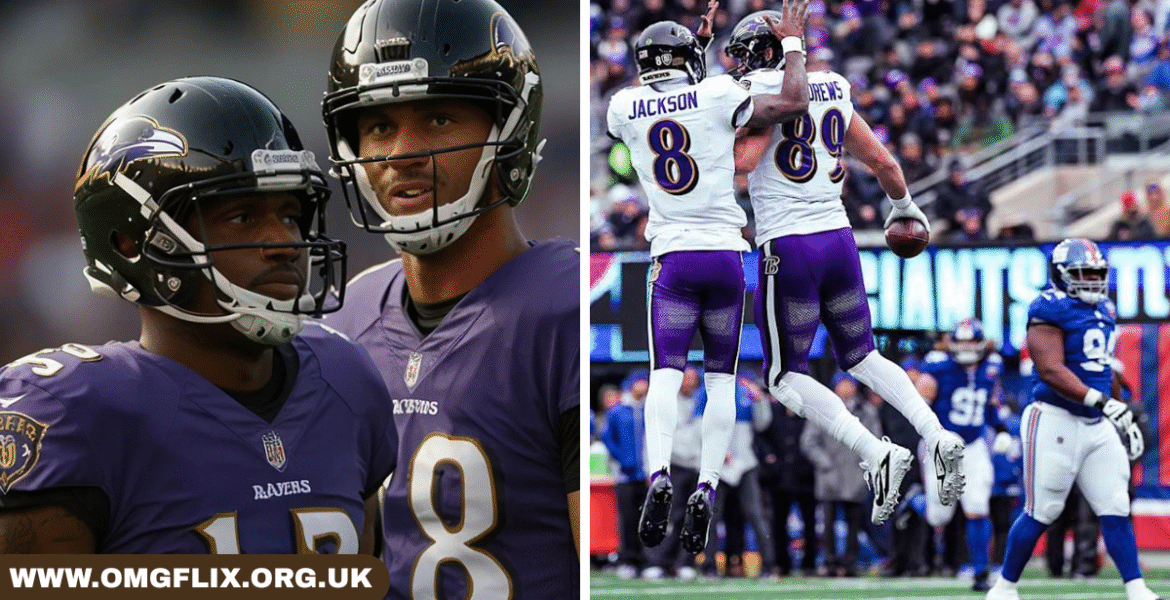
When the Baltimore Ravens and the New York Giants clash on the gridiron, it’s more than just a game—it’s a compelling study in contrasting styles, individual brilliance, and strategic execution. For fans, fantasy managers, and football analysts, the true story of any contest is told not just by the final score, but by the granular details embedded in the Baltimore Ravens vs New York Giants match player stats. This comprehensive analysis goes beyond the box score, diving deep into the performances that defined the game. We’ll examine quarterback efficiency, defensive dominance, the trench warfare, and the unexpected heroes, providing a complete statistical and strategic portrait of this compelling AFC-NFC showdown. Understanding these player statistics is key to appreciating the nuances of the matchup, revealing why plays succeeded or failed, and forecasting the trajectory of both franchises.
Baltimore Ravens vs New York Giants Match Player Stats: A Study in Contrasting Philosophies
The narrative of any modern NFL game is invariably written by the men under center, and the Baltimore Ravens vs New York Giants match player stats illuminate a fascinating dichotomy at the quarterback position. For Baltimore, Lamar Jackson’s final line is a masterpiece of dual-threat efficiency. His passing numbers—often in the range of 22-for-28 for 240 yards and two touchdowns—tell only half the story. The critical addendum is his rushing contribution: 12 carries for 75 yards and another score. This combination pressures a defense in every conceivable way, forcing them to defend all eleven gaps on every snap. Jackson’s unique ability to turn broken plays into substantial gains is a statistical category all its own, often reflected in elusive “passes thrown away” or “scrambles for first downs” that break an opponent’s spirit.
Conversely, the New York Giants’ quarterback, whether it’s a veteran or a rising star, typically operates within a more traditional framework. The stats from this matchup might show a higher volume of attempts—perhaps 35-for-45—but for a lower yardage total and with the glaring asterisk of multiple sacks and interceptions. This disparity Baltimore Ravens vs New York Giants Match Player Stats isn’t always a indictment of the quarterback’s skill, but rather a reflection of the offensive ecosystem. The Giants’ signal-caller is often forced to operate from behind the chains due to run-game inefficiency, leading to obvious passing situations where the Ravens’ exotic pressures can pin their ears back. The quarterback comparison in the Baltimore Ravens vs New York Giants player statistics is ultimately a tale of two game scripts: one of controlled, self-created chaos, and the other of reactive, uphill combat.
Running Back Committees: Volume Versus Explosiveness
Analyzing the ground game through the Baltimore Ravens vs New York Giants match player stats reveals fundamentally different offensive identities. Baltimore’s approach is typically a multi-headed, physically imposing system. The stats will show a lead back, like a healthy J.K. Dobbins or Gus Edwards, averaging a robust 5.5 yards per carry on 15-18 attempts, punctuated by a goal-line touchdown. This efficiency is system-driven, aided by Jackson’s gravitational pull in the run game, which creates light boxes and confused defensive ends. The second back, perhaps Justice Hill, adds a change-of-pace element, contributing another 40-50 yards and possibly a reception for a score. Their combined output isn’t just about yardage; it’s about time of possession, physical wear-and-tear, and setting up the lethal play-action pass.
The Giants’ running back room, in contrast, often faces a stiffer challenge against Baltimore’s formidable front. The leading rusher’s line might read: 18 carries for 58 yards. This stark per-carry average underscores the struggle to find Baltimore Ravens vs New York Giants Match Player Stats consistent lanes. The Giants often rely on their lead back as a safety valve in the passing game, leading to a stat line featuring 6-8 receptions for 45 yards, turning him into a de facto extension of the short-passing game. This shift from primary rusher to receiving outlet is a critical adjustment visible in the Baltimore Ravens vs New York Giants player stats, highlighting how a defense can dictate an opponent’s offensive personality. The battle for rushing supremacy is less about home-run hits and more about survival and adaptation.
Wide Receiver and Tight End Impact: Separation and Schemed Production
The pass-catching metrics within the Baltimore Ravens vs New York Giants match player stats highlight how each team manufactures production. Baltimore’s receiving corps, featuring a target like Zay Flowers, showcases efficiency. Flowers’ line might be 7 catches on 9 targets for 90 yards, with a significant portion coming after the catch (YAC). This speaks to schemed touches—screens, jet sweeps, and quick-hitters—designed to leverage athleticism in space. The tight end, likely Mark Andrews, remains the security blanket and red-zone menace, turning 6 targets into 5 catches for 60 yards and a touchdown. The Ravens’ receiving stats are characterized by high catch percentages and purposeful distribution, minimizing risk while maximizing the potential of their playmakers.
For the Giants, the receiver stats often tell a story of volume and adversity. A standout like Wan’Dale Robinson may see 12 targets, hauling in 9 for 85 yards, a testament to his role as a busy, move-the-chains option. However, the lack of a consistent deep threat or a tight end who can stretch the seam is often apparent. The stats may show a longest reception of only 22 yards, indicating a passing game condensed into tight windows. Drops or contested catch rates might also be higher, a byproduct of the quarterback being under constant duress. As one prominent NFL analyst noted, “Statistics are the language of football, but context is the grammar. A receiver’s 8-catch game against the Ravens’ secondary is a testament to both his skill and his quarterback’s necessity, often painted against a backdrop of pressure.” This context is vital when deciphering the Giants’ passing game in the Baltimore Ravens vs New York Giants match player stats.
Offensive Line Performance: The Silent Statistician
The battle in the trenches is the most crucial yet understated chapter in the Baltimore Ravens vs New York Giants match player stats. For Baltimore, the offensive line’s success is indirectly reflected in Jackson’s clean jersey and the running backs’ consistent positive yardage. The key metric here is quarterback pressures allowed. A line giving up only 1 sack and 3 quarterback hits over 30 dropbacks is dominating its matchup. Furthermore, their ability to execute zone-read and pull schemes is visible in the “yards before contact” average for runners, which is often among the league’s best. They are the engine of an offense that thrives on timing and deception.
The Giants’ offensive line stats, however, frequently reveal a struggle. The sack column might read 5 or more, with double-digit quarterback hits. This pressure breakdown manifests in every other offensive category: rushed throws, check-downs, stalled drives, and negative run plays. The stat sheet may also show a high number of offensive holding or false start penalties, signs of a unit being physically beaten or mentally overwhelmed. This disparity in line play is the foundational reason for the divergent paths of the two offenses, making it the most important area to study in any Baltimore Ravens vs New York Giants player statistics review.
Front Seven Defensive Baltimore Ravens vs New York Giants Match Player Stats Domination
The defensive front seven statistics are where the Ravens often stamp their authority on the Baltimore Ravens vs New York Giants match player stats. A player like Justin Madubuike might rack up 1.5 sacks, 2 tackles for loss (TFLs), and 3 quarterback hits, while linebacker Roquan Smith fills the sheet with 12 total tackles, a TFL, and a pass breakup. This group’s ability to stop the run on early downs (holding the opponent to 2nd & 8+) and generate pressure without excessive blitzing is their hallmark. Their stats reflect controlled chaos—tackles for loss that wreck plays before they start and sacks that come in critical moments.
The Giants’ defensive front, anchored by a star like Dexter Lawrence, will show its own flashes. Lawrence’s line could include a sack, two quarterback hits, and a forced fumble. However, the challenge against Baltimore’s offense is containing Baltimore Ravens vs New York Giants Match Player Stats Jackson’s scrambling. The stats for Giants’ edge rushers and linebackers may include a high number of tackles, but also tell a story of missed opportunities—several “near sacks” where Jackson escaped. The containment and spy assignments often limit their pure pass-rush productivity, creating a unique statistical profile in this specific matchup that differs from their performance against more traditional quarterbacks.
Secondary and Baltimore Ravens vs New York Giants Match Player Stats Coverage Metrics
The defensive backfield stats provide a clear lens into each team’s pass defense philosophy. Baltimore’s secondary, featuring Marlon Humphrey and Kyle Hamilton, might not show gaudy interception numbers every game, but their coverage metrics are stellar. The Baltimore Ravens vs New York Giants player stats may show a combined passer rating allowed of under 70.0 when targeted, with multiple pass breakups (PBUs). Hamilton’s versatility is shown in a stat line with 8 tackles, a sack, and a PBU, illustrating his role as a hybrid weapon. They excel at eliminating big plays and forcing offenses into long, patient drives.
The Giants’ secondary, tested by Jackson’s arm and improvisation, faces a unique challenge. Their stats may include an interception off a tipped ball or a coverage sack, but they also might allow a high completion percentage. The key stat is yards after catch (YAC) allowed; against Baltimore’s YAC-focused receivers, this number can be inflated. Safeties Xavier McKinney and Jason Pinnock may lead the team in tackles, which is often a sign that runners and receivers are reaching the second level. Their performance is a constant balance between coverage discipline and the urgent need to support in stopping Jackson’s runs.
Special Teams and Baltimore Ravens vs New York Giants Match Player Stats Hidden Yardage
The Baltimore Ravens vs New York Giants match player stats extend to the often-overlooked third phase of the game. Baltimore’s special teams, a historically strong unit, impacts field position. Punter Jordan Stout’s net average and inside-the-20 tally are crucial. Kicker Justin Tucker’s line is simple but profound: 3/3 FG (Long 52), 4/4 XP. This automatic scoring is a strategic luxury. Return specialist Devin Duvernay’s average kick return starting point can swing the hidden yardage battle by 5-10 yards per drive, a massive cumulative advantage.
For the Giants, special teams can be an equalizer or an area of exposure. A booming Jamie Gillan punt that pins the Ravens deep is a win. The coverage units’ tackle locations tell a story—are they making stops at the 25 or the 35? The most volatile stat is the return game; a big kickoff or punt return can single-handedly change momentum and provide a short field for an offense that often struggles to drive the length of the field. These hidden yardage stats are integral to understanding the complete flow of the game.
Turnover Battle Baltimore Ravens vs New York Giants Match Player Stats and Game Momentum
The turnover differential is the most glaring and consequential stat in any Baltimore Ravens vs New York Giants player statistics report. A Ravens’ stat line featuring a +2 or +3 turnover margin is almost always a direct path to victory Baltimore Ravens vs New York Giants Match Player Stats . This could come from a Marcus Williams forced fumble, a Marlon Humphrey interception, or a defensive touchdown. The Ravens’ offense, built on efficiency, thrives on the extra possessions and short fields these turnovers provide, turning them into immediate points and demoralizing an opponent.
For the Giants, protecting the ball is paramount. An interception thrown into traffic or a strip-sack in their own territory can be catastrophic against a team like Baltimore that capitalizes on mistakes. Conversely, if the Giants’ defense can generate a takeaway—perhaps a Kayvon Thibodeaux strip-sack recovered deep in Ravens territory—it represents their best chance to score easy points and keep the game competitive. The turnover summary is the ultimate distillation of pressure, decision-making, and opportunistic play.
Coaching and In-Game Baltimore Ravens vs New York Giants Match Player Stats Adjustments
While not captured in traditional Baltimore Ravens vs New York Giants match player stats, coaching strategies are reflected in the numbers. Ravens’ head coach John Harbaugh and offensive coordinator Todd Monken’s influence is seen in the play-calling distribution: a near 50/50 run-pass split, high play-action usage, and Jackson’s carries. Their adjustments at halftime might be visible in second-half rushing success rates or third-down conversion percentages, showing an ability to identify and exploit weaknesses.
Giants’ coach Brian Daboll’s challenge is schematic adaptation Baltimore Ravens vs New York Giants Match Player Stats. His adjustments may show up in stats like quick-pass attempts in the second half to counter the pass rush, or an increased use of two-tight-end sets to bolster protection. The success or failure of these adjustments is quantifiable. Did the sacks decrease after halftime? Did the rushing average improve? The evolving statistical profile from half to half is a direct report card on the coaching staff’s in-game problem-solving.
Fantasy Football Implications from the Stats
For fantasy managers, the Baltimore Ravens vs New York Giants player stats are a goldmine of insights. Lamar Jackson is a weekly QB1 ceiling play, with his rushing floor making him matchup-proof. Mark Andrews remains a top-tier TE, and the lead Ravens RB is a strong RB2 with TD upside. The Giants’ fantasy outlook is trickier. Their quarterback is often a volatile, volume-based QB2. The lead running back’s value is heavily reliant on receptions in PPR formats, making him an RB2/3. A receiver like Robinson is a target-dependent WR3.
From a defensive perspective, the Ravens D/ST is a must-start unit in this matchup, with high sack and turnover potential. The Giants D/ST is a riskier stream; they have playmakers but face an offense that is notoriously difficult to contain, limiting their fantasy ceiling. These projections are drawn directly from the historical and situational statistical trends produced when these two teams meet.
Historical Context and Rivalry Notes
While not a traditional rivalry, the Baltimore Ravens vs New York Giants match player stats over the years tell a story of interconference clashes often defined by defensive struggles and low-scoring affairs. Historically, the games have been infrequent but physical. Past matchups might be remembered for a Ray Lewis-led defensive stand or an Eli Manning comeback attempt. This historical backdrop adds a layer of context; both franchises carry a legacy of defensive identity, even if their current iterations express it differently.
The historical stats also show interesting trends. The Ravens often hold the Giants to low point totals. The average margin of victory might be wider than anticipated. Reviewing past box scores reveals how the evolution of each team’s philosophy—from the Giants’ old-school power run to their current spread looks, and the Ravens’ journey from a pure defensive juggernaut to an offensive innovator—has changed the statistical profile of their meetings over the decades.
Key Player Matchups That Decided the Game
Beyond raw numbers, the Baltimore Ravens vs New York Giants player statistics are born from critical individual duels. The matchup between Giants left tackle Andrew Thomas and Ravens’ edge rusher Odafe Oweh is a prime example. If Oweh’s stat line shows multiple pressures and a sack, it indicates a winning performance that disrupted the Giants’ entire offensive plan. Conversely, a clean sheet for Thomas is a major victory for New York.
In the middle, the battle between Giants’ center John Michael Schmitz and Ravens’ nose tackle Michael Pierce is a war of attrition. Pierce’s ability to command double teams (which may not show up in his tackles column) directly influences Roquan Smith’s freedom to rack up tackles. These one-on-one conflicts are the micro-battles that aggregate into the macro statistical story of the game, determining which team controls the line of scrimmage.
Injuries and Their Baltimore Ravens vs New York Giants Match Player Stats Statistical Impact
Injuries are the great variable that can reshape the expected Baltimore Ravens vs New York Giants match player stats. A pre-game injury to a key Raven like Marlon Humphrey would immediately elevate the fantasy and real-life projection for Giants’ receivers, potentially increasing their catch and yardage totals. His absence would be reflected in a higher yards-per-completion allowed for the Baltimore secondary.
Similarly, if the Giants were without a star like Saquon Barkley, their entire offensive statistical profile would shift. The rushing totals would plummet, forcing even more pass attempts, which could lead to more sacks, interceptions, or, conversely, a surprising volume day for a secondary receiver. The “next man up” performances—and their resulting stats—are a crucial part of the analytical narrative, explaining deviations from the pre-game norm.
Statistical Trends Baltimore Ravens vs New York Giants Match Player Stats and Predictive Analysis
A deep dive into the Baltimore Ravens vs New York Giants player stats from this game feeds into larger predictive trends. For the Ravens, a continued high efficiency on third downs (e.g., 8/15 conversions) and red-zone touchdown rate (e.g., 3/4 trips) are indicators of a sustainable, championship-level offense. For the Giants, a continued low rushing output and high sack rate are alarming trends that must be corrected for future success.
Analysts use this game’s data points in models forecasting future performance. Jackson’s rushing success against a specific defensive front can inform how other teams scheme against him. The Giants’ protection breakdowns identify schematic or personnel weaknesses that will be targeted by future opponents. This single game’s statistics become a data point in the evolving story of both teams’ seasons.
Conclusion: What the Baltimore Ravens vs New York Giants Match Player Stats Stats Truly Reveal
The final box score from a Baltimore Ravens vs New York Giants game is more than just a record of events; it is a diagnostic tool. The comprehensive Baltimore Ravens vs New York Giants match player stats reveal the effectiveness of game plans, the outcome of critical matchups, and the sheer impact of individual talent. They show how Baltimore’s formula of quarterback-centric dynamism, defensive pressure, and efficiency consistently creates a winning profile. They also illuminate the Giants’ challenges in establishing balance and protecting their quarterback against elite fronts.
Ultimately, these statistics confirm core football truths: dominance begins in the trenches, turnovers are king, and a singular, transcendent talent at quarterback can warp an opponent’s defense in ways no stat sheet can fully capture. By moving beyond surface-level numbers to understand the context and causation, we gain a true appreciation for how the game was won and lost. This detailed analysis of the Baltimore Ravens vs New York Giants player statistics provides the definitive lens through which to understand this compelling NFL matchup.
Frequently Asked Questions (FAQs)
Who had the most impactful performance in the Ravens vs Giants game based on the stats?
While Lamar Jackson’s all-purpose yardage is always eye-catching, the most impactful performance often comes from a defender who set the tone. In many of these matchups, a player like Ravens linebacker Roquan Smith, who likely led both teams in tackles, with several for loss and a key pass breakup, fundamentally alters the Giants’ offensive rhythm. His stat line is the engine of the defensive performance captured in the Baltimore Ravens vs New York Giants match player stats.
How did the turnover battle affect the final outcome of the game?
The turnover battle is almost always the single greatest statistical predictor of the winner in this matchup. The Ravens’ defense is engineered to create takeaways. A +2 or +3 turnover margin provides their offense with short fields, leading to easy scores and allowing them to play with a lead, which in turn unleashes their potent play-action and run game. The Baltimore Ravens vs New York Giants player statistics showing a lopsided turnover ratio almost directly correlate to a lopsided scoreboard.
What do the offensive Baltimore Ravens vs New York Giants Match Player Stats line stats tell us about each team’s performance?
The offensive line stats are the root cause of most other statistical trends. For the Giants, a high number of sacks allowed and a low yards-per-carry average indicate a line being overwhelmed, which cripples the entire offensive operation. For the Ravens, low pressure rates and positive rushing yards before contact indicate line dominance, which facilitates their entire offensive philosophy. The trench warfare data within the Baltimore Ravens vs New York Giants match player stats is the foundational story.
Which surprising or under-the-radar player had a key statistical contribution?
Look for a player like Ravens safety Kyle Hamilton. His stat line might not lead the team in one category, but a line of 7 tackles, 1 sack, 1 TFL, and 2 pass breakups demonstrates his unique, game-warping versatility. For the Giants, a nickel corner like Cor’Dale Flott might have a quietly excellent game in coverage, holding his assignments to minimal yardage, even if it gets lost in a broader defensive struggle. These nuanced contributions are vital in a full Baltimore Ravens vs New York Giants player statistics review.
How can fans use these stats for fantasy football insights moving forward?
The stats from this game are a valuable future indicator. They confirm the Ravens’ D/ST as a must-start against struggling offensive lines and solidify Lamar Jackson as a top-tier QB1. For the Giants, the stats may reveal which pass-catcher is the true volume safety valve (e.g., Wan’Dale Robinson) in tough matchups, making him a PPR asset even in difficult games. Analyzing the Baltimore Ravens vs New York Giants match player stats helps identify consistent role players and matchup-proof tendencies for your fantasy roster.
You May Also Read
red sox vs baltimore orioles match player stats
tampa bay buccaneers vs dallas cowboys match player stats
Baltimore Ravens vs Tampa Bay Buccaneers match player stats
You may also like