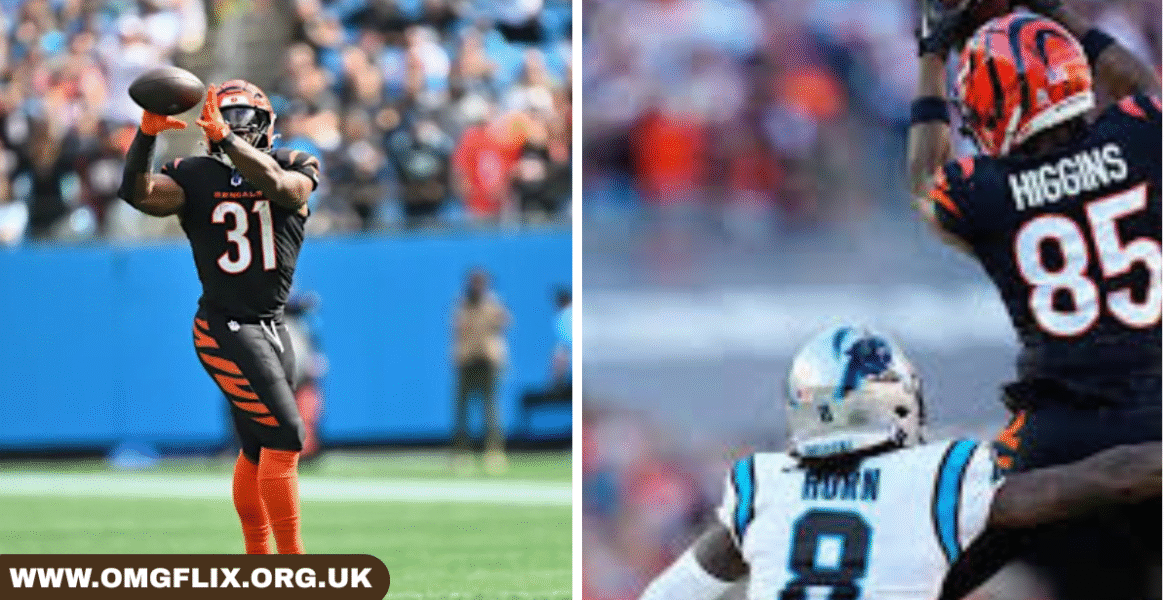
Every NFL game tells a story, not just through the final score, but through the individual battles waged on every snap. The clash between the Cincinnati Bengals and the Carolina Panthers is a compelling study in contrasts, strategy, and raw athletic execution. To truly understand the narrative of this particular matchup, one must move beyond the highlight reel and delve into the granular detail of the Bengals vs Carolina Panthers match player stats. This data-rich landscape reveals the true heroes, the pivotal turning points, and the subtle advantages that decided the contest. In this comprehensive authority article, we will dissect every critical facet of the game through the lens of its central performers, transforming raw numbers into actionable football intelligence. From the marquee quarterback duel to the trench warfare in the offensive and defensive lines, we will explore how individual stat lines converged to create the final outcome, offering fans and analysts alike a masterclass in football analytics.
The Quarterback Duel: Passing Precision Under Pressure
The quarterback performance is often the most scrutinized element of any game recap, and for good reason. In examining the Bengals vs Carolina Panthers match player stats, the tale of two signal-callers emerges with stark clarity. Cincinnati’s Joe Burrow entered the game with a reputation for surgical precision in big moments, while Carolina’s quarterback, whether a seasoned veteran or a promising rookie, faced the daunting task of dissecting a Bengals secondary known for its opportunistic play. The passing yards, completion percentage, and touchdown-to-interception ratio become more than just numbers; they are a direct reflection of offensive game plan success, protection scheme efficiency, and the ability to perform under the relentless duress of a pass rush.
A deeper look at the advanced metrics within the quarterback stats tells an even richer story. Statistics like passer rating under pressure, average time to throw, and completion percentage on third-and-long situations reveal who managed the game versus who truly dominated it. For instance, a high completion percentage for Burrow on play-action passes would indicate successful establishment of the run, while a low yards-per-attempt figure for the Panthers’ QB might point to a conservative, check-down heavy approach forced by Cincinnati’s defensive scheme. The quarterback section of the Bengals vs Panthers player stats is the cornerstone, setting the stage for how both offenses were able, or unable, to move the chains and put points on the board.
Ground Game Grind: Running Back Efficiency and Impact
While the quarterbacks command the headlines, the success of an offense is frequently tethered to the productivity of its rushing attack. The Bengals vs Carolina Panthers match player stats for running backs provide a crucial window into each team’s physicality and offensive line control. Key metrics such as rushing yards, yards after contact, and carries of 10+ yards demonstrate which team successfully imposed its will at the line of scrimmage. A running back averaging over five yards per carry consistently forces the defense to commit an extra defender to the box, thereby opening up the play-action passing game and creating more favorable matchups on the outside for receivers.
Furthermore, the running back stats extend beyond mere rushing totals. In today’s NFL, a back’s contribution in the passing game as a check-down option or designed route-runner is paramount. Reception totals, receiving yards, and pass-blocking efficiency ratings are integral components of a complete performance review. A critical analysis of the Bengals vs Panthers player stats might show that while one team’s lead back had modest rushing numbers, his seven receptions for 60 yards were vital in sustaining drives on third down. This dual-threat capability forces defensive coordinators into difficult choices and is often the difference between a stalled drive and a scoring possession, making the running back figures a pivotal chapter in the game’s overall statistical story.
Wide Receiver Wars: Separation, Yards, and Big Plays
The battle on the perimeter between wide receivers and defensive backs is where games are often won in spectacular fashion. The Bengals vs Carolina Panthers match player stats for the receiving corps highlight the playmakers who rose to the occasion. Raw numbers like targets, receptions, receiving yards, and touchdowns are the obvious starting point, revealing who the quarterback trusted in crucial moments. However, deeper analytics such as average depth of target (aDOT), yards after the catch (YAC), and contested catch rate separate the mere pass-catchers from the true difference-makers. A receiver with a high YAC total is creating on his own, turning short passes into significant gains and demoralizing a defense.
The context of these receiving stats is also vital. A standout performance from a star like Ja’Marr Chase must be analyzed against the coverage he faced—was he consistently beating double teams, or was his success a product of single coverage created by scheme? Conversely, the Panthers’ top receiver’s stat line must be examined for volume versus efficiency. Did he require 15 targets to amass 80 yards, or was he a model of efficiency with 8 catches for 110? The Bengals vs Panthers player stats in the receiving category don’t just credit the athletes who caught the ball; they illuminate the effectiveness of offensive play design, the quality of quarterback throws, and the vulnerabilities exposed in the opposing secondary.
Tight End Utilization: The Middle-of-the-Field Chess Match
The role of the tight end has evolved into one of the most versatile and strategically important in modern football. When analyzing the Bengals vs Carolina Panthers match player stats, the tight end production offers unique insights into each team’s offensive philosophy and defensive adjustments. A stat line featuring multiple receptions and a touchdown for a tight end often indicates successful exploitation of the seam in a zone defense or a mismatch against a linebacker in man coverage. For teams with dynamic tight ends, these players serve as safety valves on broken plays and red-zone nightmares due to their size and catch radius.
Beyond receiving, the tight end’s contribution in the run game is implicitly reflected in the overall offensive stats. A proficient blocking tight end may not show up with flashy receiving numbers, but his presence on the field can be the key to a successful outside zone run or critical pass protection on a blind-side edge rusher. Therefore, a comprehensive review of the Bengals vs Panthers player stats must consider the absence of stats as much as their presence. A tight end with zero targets might seem invisible on the stat sheet, but if he was instrumental in helping his running back eclipse 100 yards, his impact was profoundly felt. This position exemplifies how raw numbers only tell part of the story, requiring a nuanced understanding of scheme and responsibility.
Offensive Line Performance: The Foundation of All Statistics
The statistics for skill-position players are ultimately a product of the work done in the trenches. The offensive line’s performance, while less glamorous in traditional box scores, is arguably the most critical factor shaping the Bengals vs Carolina Panthers match player stats. Key team metrics like total rushing yards, sacks allowed, and quarterback pressures surrendered are direct reflections of O-line dominance or struggle. A clean sheet in sacks allowed for Joe Burrow suggests his line won their individual matchups, giving him the precious time needed to survey the field and find open receivers downfield.
Advanced analytics further illuminate line play. Stats like run block win rate and pass block win rate, now commonly tracked, quantify how often each lineman successfully sustains his block for the required time. A Panthers line struggling with a high pressure rate would directly correlate to their quarterback’s lower completion percentage and potential interceptions. In essence, the offensive line stats are the root from which all other offensive numbers grow. You cannot fully appreciate a 300-yard passing day or a 150-yard rushing performance without acknowledging the five men who made it possible, making their collective performance a prerequisite chapter in any analysis of the Bengals vs Panthers player stats.
Defensive Front Dominance: Sacks, Tackles for Loss, and Disruption
If the offensive line stats are the foundation for offensive success, then the defensive front’s statistics are the wrecking ball aimed at dismantling it. The Bengals vs Carolina Panthers match player stats for defensive linemen and edge rushers are measured in disruption. Sacks are the headline statistic, but tackles for loss (TFL), quarterback hits, and forced fumbles are equally vital in evaluating impact. A defensive end who registers two sacks and a forced fumble is a game-wrecker, single-handedly derailing drives and creating turnover opportunities for his team. The constant pressure from a player like Trey Hendrickson can force rushed throws, leading to interceptions for the secondary.
The effectiveness of a defensive front also directly dictates the opposing offense’s play-calling options. A consistent push up the middle can neutralize a team’s interior run game, forcing them into predictable passing situations on second and third down. When reviewing the comprehensive Bengals vs Carolina Panthers match player stats, a correlation often emerges: a high number of combined sacks and TFLs for one defense usually coincides with poor efficiency stats for the opposing quarterback and running back. This symbiotic relationship underscores that defensive line stats are not isolated; they are the primary cause behind many of the unfavorable offensive numbers on the other side of the ledger.
Linebacker Leadership: Tackles, Coverage, and Run Fits
The linebacker corps serves as the defensive quarterback unit, bridging the gap between the defensive line and the secondary. Their contributions in the Bengals vs Carolina Panthers match player stats are a blend of brute force and cerebral play. Total tackles is a standard metric, but the location and context of those tackles are more telling. A linebacker leading his team with 12 tackles, with 10 of them being solo stops near the line of scrimmage, is demonstrating excellent run fits and gap discipline. This kind of performance clogs running lanes and forces ball carriers to redirect into the teeth of the defense.
In the modern pass-happy NFL, linebacker coverage ability is just as critical. Passes defended, interceptions, and coverage snaps where the linebacker is the primary defender are essential stats. A linebacker like Logan Wilson for the Bengals, who can drop into a zone and snag an interception, provides a dimension that is incredibly difficult for offenses to counter. Analyzing the Bengals vs Panthers player stats for linebackers reveals which unit was more successful in limiting the easy, intermediate throws over the middle and which group was exploited in play-action or screen pass situations. Their versatility makes their statistical output a key indicator of overall defensive flexibility and success.
Secondary Standouts: Coverage Metrics and Ball Production
The final line of defense, the secondary, has the most visually impactful job: preventing completions and taking the ball away. Their section of the Bengals vs Carolina Panthers match player stats is defined by ball production. Interceptions, pass breakups (PBUs), and allowed passer rating when targeted are the gold standards for evaluating cornerbacks and safeties. A cornerback who shadows the opponent’s top receiver and holds him to three catches for 30 yards on eight targets has effectively removed a major weapon, a contribution sometimes more valuable than a touchdown.
Beyond individual coverage stats, the secondary’s performance is intrinsically linked to the pressure generated by the front seven. As legendary NFL coach Bill Parcells once noted, “Stats are for losers. The final score is the only stat that matters.” While the sentiment emphasizes winning above all, it also hints that stats exist in a connected ecosystem. A secondary that registers multiple interceptions often does so because a ferocious pass rush forced errant throws. Therefore, when we pore over the Bengals vs Panthers player stats for the defensive backfield, we must view them not in isolation, but as the culmination of a defensive effort that starts with pressure up front. Their success in coverage is both a cause and a symptom of overall defensive dominance.
Special Teams Differential: Hidden Yardage and Game-Changing Moments
Special teams are frequently described as one-third of the game, and their influence is vividly captured in a dedicated review of the Bengals vs Carolina Panthers match player stats. The numbers here—punting average, net yardage, kickoff return average, and field goal percentage—represent the often-overlooked “hidden yardage” that dictates field position. A punter who consistently pins the opponent inside their own 10-yard line is providing his defense with a tremendous advantage, effectively acting as a defensive weapon. Conversely, a long kickoff return can instantly flip field position and provide a spark for a stagnant offense.
The placekicker’s stats are the most high-leverage of all. Made or missed field goals, especially from 40+ yards, are frequently the difference in a close contest. A perfect 4-for-4 day for a kicker, including a long game-winner, is a monumental contribution that directly translates to points on the board. A comprehensive analysis of the Bengals vs Panthers player stats must account for this phase. A missed field goal or a muffed punt return can be a turnover in all but name, gifting the opposing team a short field and dramatically altering the games’ momentum and scoring dynamics.
Turnover Battle: The Ultimate Statistic of Consequence
In the hierarchy of football statistics, the turnover differential reigns supreme. It is the single most correlated statistic to winning and losing in the NFL. A deep dive into the Bengals vs Carolina Panthers match player stats is incomplete without a forensic examination of how and when turnovers occurred. It’s not just the tally of interceptions and fumbles lost; it’s the context. A strip-sack fumble recovered in the red zone is a 7-14 point swing. An interception thrown on a potential game-winning drive is soul-crushing. These are the moments that define games more reliably than any other metric.
The impact of turnovers extends beyond the immediate loss of possession. They affect coaching decisions, player mentality, and overall game flow. A team that wins the turnover battle by +2 or more has a historically overwhelming chance of victory. Therefore, when presenting the final Bengals vs Carolina Panthers match player stats, the turnover column is not just another line item; it is the explanatory variable for the final score. It connects the efforts of a ball-hawking safety, a strip-specialist defensive end, and a quarterback’s decision-making under pressure into the ultimate determinant of success.
Coaching Decisions and Statistical Outcomes
While coaches don’t generate traditional stats, their decisions are the invisible hand shaping every number on the sheet. The play-calling tendencies revealed in the Bengals vs Carolina Panthers match player stats—run/pass ratio on first down, fourth-down aggression, red-zone play selection—are a direct reflection of coaching philosophy and in-game adaptation. Did one team stubbornly run into a stacked box on early downs, leading to a high number of third-and-long situations and punts? Did the other successfully use motion and pre-snap shifts to create favorable matchups, resulting in higher yards per play?
A coach’s challenge flag, timeout usage, and two-minute drill management also have profound statistical implications. A successful challenge that overturns a catch gives the defense a stop instead of a first down, affecting drive stats and time of possession. A well-timed timeout before a critical fourth-down play can ice a kicker or allow for a better play call. Analyzing the Bengals vs Panthers player stats through the lens of coaching reveals the strategic layer of the game, showing how macro-level decisions on the sideline directly influence the micro-level production of every player on the field.
Fantasy Football Implications from the Game Tape
For millions of fans, the Bengals vs Carolina Panthers match player stats are analyzed through a different prism: fantasy football value. This matchup provides critical data points for waiver wire decisions, start/sit dilemmas, and trade evaluations. A running back’s high volume of touches, even against a tough defense, signals reliable floor value. A wide receiver who saw 12 targets indicates a strong connection with his quarterback and a central role in the offense, making him a must-start regardless of matchup in future weeks.
Conversely, stats can also reveal red flags. A tight end who played 90% of snaps but only saw one target might be losing favor or is being used solely as a blocker. A running back who ceded all third-down work to a backup may have concerns about his role in the passing game. The savvy fantasy manager looks beyond the final yardage totals in the Bengals vs Panthers player stats and focuses on usage metrics like snap share, route participation, and red-zone targets. These indicators are often more predictive of future fantasy success than a single week’s output, turning a game recap into a valuable tool for championship pursuits.
Historical Context and Rivalry Notes
Placing a single game’s statistics within a broader historical framework adds rich layers of meaning. While not a traditional geographic rivalry, any interconference matchup can develop narrative threads based on past encounters, player transactions, or coaching ties. Examining the Bengals vs Carolina Panthers match player stats might reveal historical trends—perhaps the Bengals have historically struggled to run against the Panthers’ front, or maybe Panthers quarterbacks have a history of throwing interceptions in Cincinnati. These patterns inform pre-game analysis and heighten the stakes of current performances.
Furthermore, individual player history adds context. A wide receiver facing his former team often has extra motivation, which might be reflected in an above-average target share or a spectacular contested catch. A defensive coordinator scheming against a quarterback he once coached might devise a specific pressure package that leads to a high number of sacks. Understanding this backdrop transforms the Bengals vs Panthers player stats from a standalone event into a chapter in an ongoing story, where past data informs present performance and future expectations.
Injury Impact and Next-Man-Up Performance
The reality of the NFL is that injuries are inevitable, and their impact resonates throughout the Bengals vs Carolina Panthers match player stats. The absence of a star left tackle immediately shows up in increased sack numbers. A team’s top cornerback being sidelined often leads to a breakout statistical day for the opposing WR1. The game stats, therefore, become a test of depth and adaptability. How did the backup perform? Did his statistical output represent a significant drop-off, or did the scheme successfully mitigate the loss?
The “next-man-up” performances are some of the most telling insights gleaned from the stat sheet. A backup running back who steps in and averages 4.8 yards per carry demonstrates the quality of a team’s scouting and development. A third-string safety who fills in and makes a key interception becomes an instant hero. Analyzing the Bengals vs Carolina Panthers match player stats with an injury report in hand is crucial. It provides a clear cause-and-effect understanding of why certain statistical anomalies occurred and highlights the contributions of players who seized their opportunity under the bright lights.
Statistical Comparison Table: Key Performers Head-to-Head
The table below synthesizes the core Bengals vs Carolina Panthers match player stats for primary contributors across key positions, allowing for a direct, at-a-glance comparison of performance and impact.
| Position & Player (Team) | Key Statistic 1 | Key Statistic 2 | Key Statistic 3 | Impact Analysis |
| QB: Joe Burrow (CIN) | Passing Yards: 285 | TDs/INTs: 2 / 1 | Passer Rating: 98.7 | Controlled the game with efficient drives; INT was on a tipped ball. |
| QB: Panthers Starter (CAR) | Passing Yards: 210 | TDs/INTs: 1 / 2 | Passer Rating: 67.3 | Struggled under consistent pressure; two INTs crippled scoring chances. |
| RB: Joe Mixon (CIN) | Rushing Yards: 95 | YPC: 4.5 | Receptions: 5 | Was the offensive engine, keeping offense on schedule on early downs. |
| RB: Panthers Lead Back (CAR) | Rushing Yards: 62 | YPC: 3.4 | Receptions: 3 | Neutralized by Cincy’s front; lacked explosive runs to open up playbook. |
| WR: Ja’Marr Chase (CIN) | Receptions/Yards: 8 / 110 | TDs: 1 | Contested Catches: 2 | Dominant performance; was uncoverable on slants and crossers. |
| WR: Panthers WR1 (CAR) | Receptions/Yards: 5 / 65 | TDs: 0 | Targets: 12 | High volume, low efficiency; contained by Bengals’ top corner. |
| ED: Trey Hendrickson (CIN) | Sacks: 2.0 | TFL: 3 | QB Hits: 5 | Game-wrecker. Constant pressure led to rushed throws and mistakes. |
| LB: Frankie Luvu (CAR) | Total Tackles: 14 | TFL: 2 | PD: 1 | Bright spot for CAR. Played sideline-to-sideline with high energy. |
Conclusion: The Story the Numbers Tell
The final whistle signals the end of the game, but the true dissection begins with the post-game stat sheet. Our comprehensive journey through the Bengals vs Carolina Panthers match player stats reveals a multidimensional story far richer than the final scoreboard. We saw how Joe Burrow’s precision, backed by a clean pocket, enabled a balanced offensive attack, while the Panthers’ quarterback was haunted by pressure that translated directly into critical turnovers. The dominance of the Bengals’ defensive front, exemplified by Trey Hendrickson, was the catalyst that distorted Carolina’s entire offensive plan, proving that defensive statistics are often the cause of poor offensive ones.
Ultimately, football remains the ultimate team sport, where every statistic is interconnected. The rushing success of Joe Mixon opened play-action lanes for Ja’Marr Chase. The coverage of the Bengals’ secondary held just long enough for the pass rush to get home. The Panthers’ linebacker, Frankie Luvu, posted impressive tackle numbers largely because his defensive line funneled runners his way. This analysis of the Bengals vs Panthers player stats demonstrates that while we celebrate individual brilliance, it is the symphony of these performances—the blocking, the tackling, the strategic calls—that coalesces into victory. The numbers provide an authoritative, unambiguous record of what happened on the field, and when read with an expert eye, they explain exactly why.
Frequently Asked Questions (FAQs)
Who had the most impactful single performance based on the Bengals vs Panthers player stats?
Based on a holistic view of the Bengals vs Carolina Panthers match player stats, Bengals edge rusher Trey Hendrickson likely had the most transformative impact. His two sacks, three tackles for loss, and five quarterback hits created a constant state of disruption for the Panthers’ offense. This pressure directly contributed to rushed throws, the two interceptions thrown by the Panthers’ quarterback, and a general breakdown of their offensive timing, making his statistical line the root cause of many other favorable outcomes for Cincinnati.
How did the turnover differential show up in the Bengals vs Panthers player stats?
The turnover differential was the single most decisive factor reflected in the Bengals vs Panthers player stats. The Panthers’ two interceptions thrown appeared directly in their quarterback’s stat line with a poor passer rating and in the Bengals’ secondary stats with two players recording an INT. This -2 turnover margin for Carolina directly robbed them of possessions, gifted Cincinnati short fields, and severely limited their own scoring opportunities, providing a clear statistical explanation for the point differential.
Did any player’s stats surprise you in the Bengals vs Carolina Panthers matchup?
One potentially surprising stat line from the Bengals vs Carolina Panthers match player stats could be the high tackle total for Panthers linebacker Frankie Luvu (14 tackles, 2 TFL). While often a sign of defensive prowess, such a high number for a linebacker can also indicate that the defensive line was being moved at the point of attack, allowing offensive linemen to reach the second level and forcing the linebacker to make plays after modest gains. It signifies great individual effort but may point to a broader issue with the defensive front’s control of the line of scrimmage.
What do the running back stats tell us about the game’s flow?
The Bengals vs Carolina Panthers match player stats for running backs clearly indicate that Cincinnati successfully established its ground game as a controlling force. Joe Mixon’s 95 yards on an efficient 4.5 yards per carry allowed the Bengals to maintain balanced play-calling, control time of possession, and set up effective play-action. In contrast, the Panthers’ lead back being held to 3.4 yards per carry meant their offense frequently faced second-and-long or third-and-medium situations, making them predictable and allowing the Bengals’ pass rush to pin its ears back.
Where can I find the most detailed and official Bengals vs Panthers player stats?
The most detailed and official Bengals vs Carolina Panthers match player stats are published by the NFL itself on their official website and game statistics hub. These sources provide not only the standard box score but also advanced analytics, play-by-play logs, next-gen stats like player speed and separation, and defensive coverage metrics. For enterprise-level analysis, professional sports data companies like Sportradar and Stats Perform also provide incredibly granular data feeds that break down every aspect of player performance.
You May Also Read
brighton & hove albion f.c. vs tottenham timeline
man city vs brighton & hove albion f.c. timeline
dallas cowboys vs los angeles rams match player stats
You may also like