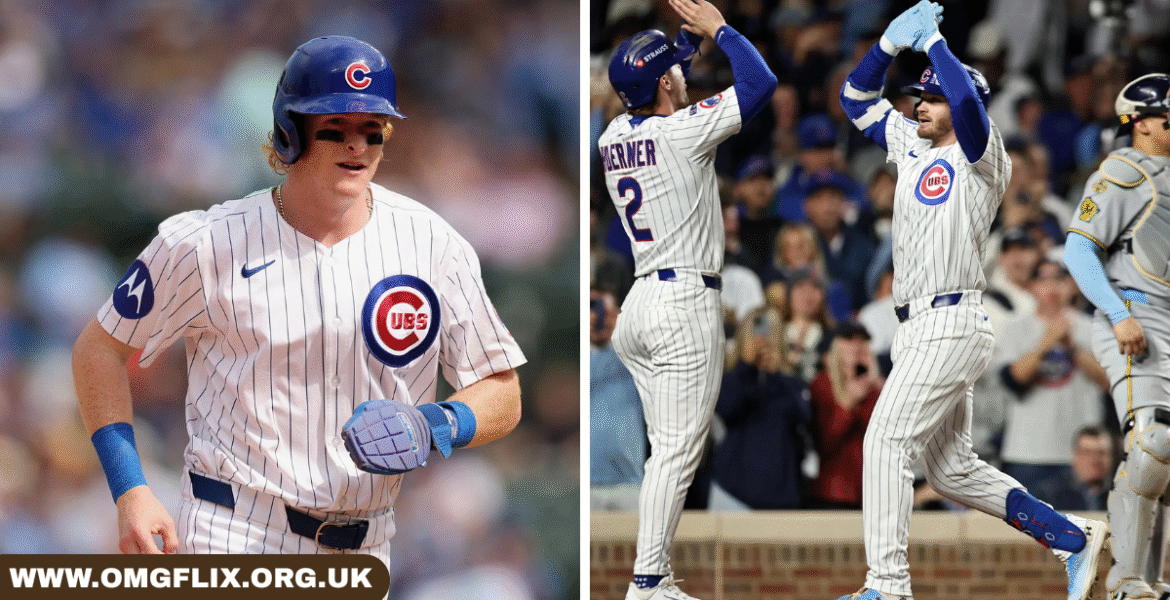
The clash between the Chicago Cubs and the Milwaukee Brewers is more than just a divisional series; it’s a compelling narrative of contrasting identities, strategic depth, and individual brilliance that often decides the fate of the National League Central. At the heart of understanding this modern rivalry lies a meticulous examination of the Chicago Cubs vs Milwaukee Brewers match player stats. These numbers are not mere footnotes; they are the DNA of each contest, revealing pitching duels, clutch hitting, defensive gems, and the subtle advantages that tilt games. For fans, analysts, and fantasy managers, delving into these statistics provides the ultimate key to forecasting outcomes, appreciating tactical maneuvers, and celebrating the players who consistently leave their mark on this intense matchup. This comprehensive guide will serve as your authority resource, unpacking the historical context, positional battles, and the specific Chicago Cubs vs Milwaukee Brewers match player stats that tell the true story of one of baseball’s most intriguing and competitive rivalries.
The Historical Context of the Cubs-Brewers Rivalry
While lacking the century-old weight of some baseball feuds, the Cubs-Brewers rivalry has fermented into a potent and distinctly modern contest, defined by proximity and perennial contention. The Brewers’ move to the National League in 1998 transformed these regional neighbors into direct competitors, adding stakes to every series. The rivalry truly ignited in the late 2000s and has since been characterized by tightly contested division races, where a single series in September can swing the balance. This constant battle for NL Central supremacy ensures that every game is played with playoff intensity, making the accumulation and analysis of Chicago Cubs vs Milwaukee Brewers match player stats critical for both front offices.
Understanding this history is essential to contextualizing the player statistics we examine. The pressure of a pennant race amplifies every performance metric. A hitter’s slugging percentage against a division foe in April carries different weight than the same stat in a September showdown. The historical back-and-forth—from the Cubs’ dominant 2016-2018 window to the Brewers’ consistent contention built on pitching and player development—creates a laboratory where player matchups are tested repeatedly under high-leverage conditions. Therefore, when we analyze the Chicago Cubs vs Milwaukee Brewers match player stats, we are not just looking at numbers in a vacuum; we are reading the chapters of an ongoing strategic war, with each player’s data point contributing to the larger narrative of team philosophy and divisional survival.
Decoding Pitching Matchups: The Starting Rotation Showdown
The starting pitcher duel sets the foundational tone for any game, and in the Cubs-Brewers dynamic, it often dictates the entire strategic flow. Analyzing the Chicago Cubs vs Milwaukee Brewers match player stats for starting pitchers goes far beyond wins and losses. Key metrics include innings pitched (IP), earned run average (ERA), walks and hits per inning pitched (WHIP), and, crucially, strikeout-to-walk ratio (K/BB) within the rivalry. For Brewers aces, success has historically been built on missing bats and limiting hard contact, while Cubs starters have often balanced strikeout ability with inducing ground balls. The head-to-head statistics for each pitcher against the opposing lineup reveal pronounced platoon advantages, hitter-specific weaknesses, and which arms have proven to be true “stoppers” in slowing down the rival’s offense.
These pitching performances are deeply influenced by the home ballparks. The contrast between the hitter-friendly confines of Wrigley Field and the more pitcher-oriented American Family Field creates a fascinating statistical split. A pitcher’s ERA in Milwaukee may look stellar, but his performance in Chicago could tell a different story, heavily impacted by wind direction and the iconic outfield ivy. Therefore, a complete analysis of Chicago Cubs vs Milwaukee Brewers match player stats for pitchers must be bifurcated by venue. It’s not uncommon to see a pitcher dominate at home but struggle on the road in this rivalry, making the home-and-away splits a primary focus for managers setting their rotation and bullpen usage for these critical series. This environmental factor adds a rich layer of complexity to evaluating individual pitching performances.
Bullpen Dynamics and High-Leverage Relievers
If starting pitchers script the game’s opening act, the bullpens author its dramatic conclusion, especially in the one-run games that frequently define this rivalry. The Chicago Cubs vs Milwaukee Brewers match player stats for relievers are a study in high-pressure execution. Metrics like holds, saves, inherited runners scored percentage, and batting average against (BAA) with runners in scoring position become paramount. The Brewers, for years, have been lauded for constructing deep, versatile bullpens with multiple arms capable of missing bats in late innings, turning games into six-inning contests for opponents. The Cubs, meanwhile, have sought to build similar relief corps, often leading to direct confrontations between elite late-inning specialists and the heart of the opposing order in the seventh, eighth, and ninth innings.
The managerial chess match in these moments is directly reflected in the reliever matchup data. Which Brewers lefty specialist has neutralized the Cubs’ power-hitting lefties? Which Cubs right-hander has consistently gotten the better of Milwaukee’s core right-handed bats? The answers lie in the granular Chicago Cubs vs Milwaukee Brewers match player stats. Furthermore, the usage patterns—how often a reliever is deployed on consecutive days or asked to get more than three outs—can be traced directly to the intensity of this divisional fight. A reliever’s season-long stats might be impressive, but his effectiveness specifically against the Cubs or Brewers, often in game-on-the-line situations, is the true measure of his value to this rivalry. These pressure-packed performances often decide series and leave an indelible mark on the season’s standings.
Offensive Production: Analyzing the Core Lineups
On the offensive side, the Chicago Cubs vs Milwaukee Brewers match player stats reveal the engines that drive each team’s success and highlight starkly different organizational philosophies. For the Cubs, offensive production has often been fueled by high-on-base percentage hitters, power from the corners, and a more traditional middle-of-the-order thump. The Brewers, conversely, have frequently embraced a “three true outcomes” approach (home run, walk, strikeout), prioritizing power and patience even at the expense of batting average. When these lineups clash, the statistical output shows clear patterns: which hitters elevate their game against top-tier pitching, who thrives in clutch situations, and which players struggle to adjust to the rival’s specific pitching philosophy.
Breaking down these offensive stats requires looking beyond traditional triple-crown numbers. On-base plus slugging (OPS), weighted runs created plus (wRC+), and isolated power (ISO) against the opposing team provide a clearer picture of true impact. For instance, a Cub’s hitter might have a modest batting average against the Brewers, but if his OPS is high due to a slew of extra-base hits and walks, his contribution remains significant. Similarly, a Brewers hitter’s propensity for the timely home run is captured in stats like slugging percentage with runners on base. Tracking these Chicago Cubs vs Milwaukee Brewers match player stats over multiple seasons identifies the “Brewer Killers” and “Cub Killers”—those players whose performances seem to consistently tip the scale in this tight rivalry, regardless of their overall season numbers.
Defensive Impact and Key Positional Battles
While glamour often resides in home runs and strikeouts, defense is a silent, run-preventing weapon that profoundly impacts the Chicago Cubs vs Milwaukee Brewers match player stats. Both teams have, at various times, prioritized defensive excellence up the middle—at catcher, shortstop, and center field. A catcher’s caught-stealing percentage against the rival’s aggressive baserunners, a shortstop’s defensive runs saved (DRS) on the tricky infields of both parks, and an outfielder’s ability to track down gappers in Wrigley’s unique corners or Milwaukee’s deep power alleys all translate into tangible advantages. These defensive plays prevent runs from appearing on the pitcher’s ledger and directly influence the win probability of each game.
The defensive metrics create fascinating positional subplots. The battle between a Brewers’ elite defensive catcher and the Cubs’ running game is a constant. The range of each team’s middle infielders, especially on the artificial turf in Milwaukee, can turn potential hits into outs and shift momentum. As famed baseball executive Branch Rickey once noted, “Luck is the residue of design.” This is especially true defensively in this rivalry. What looks like a lucky bounce or a miraculous catch is often the result of positioning, preparation, and skill—all quantifiable through advanced stats. Therefore, a full appreciation of the Chicago Cubs vs Milwaukee Brewers match player stats is incomplete without acknowledging the defensive contributions that stifle rallies and preserve narrow victories, aspects that are increasingly measured and valued by both organizations.
Head-to-Head Player Performance Analysis
To move from general trends to specific insights, we must examine the direct confrontations that define games. The table below provides a snapshot of key historical matchup data for core players, illustrating how individual performances can shape the rivalry. This kind of head-to-head analysis is the most direct application of Chicago Cubs vs Milwaukee Brewers match player stats, revealing clear advantages, puzzling struggles, and the micro-battles within the war.
Select Historical Head-to-Head Player Matchups (Illustrative Examples)
| Player (Team) | Opposing Pitcher/Team | Key Statistic (Sample) | Insight & Impact |
| Christian Yelich (MIL) | Cubs Pitching Staff | Career OPS vs. CHC: .915 | Has been a consistent catalyst; success sets tone for Brewers’ offense. |
| Ian Happ (CHC) | Corbin Burnes (MIL) | BA < .200, High K% | Illustrates ace’s dominance over a key lefty bat; a pivotal matchup. |
| Dansby Swanson (CHC) | Brewers Pitching Staff | High DRS & Defensive Impact | Prevents runs; his defensive value is a constant against MIL contact. |
| Willy Adames (MIL) | Marcus Stroman (CHC) | Multiple HR in limited AB | Shows power success against a specific style, influencing rotation plans. |
| Seiya Suzuki (CHC) | Devin Williams (MIL) | Limited AB, High Whiff% | Showcases reliever’s elite “airbender” vs. a disciplined hitter. |
This table, while containing illustrative examples, demonstrates how managers and analysts dissect the Chicago Cubs vs Milwaukee Brewers match player stats. A hitter’s prolonged success against a rival’s ace can force proactive bullpen usage. A pitcher’s repeated dominance over a core lineup piece allows for more aggressive pitching around him. These individual narratives, built over dozens of plate appearances, inform in-game decisions, lineup construction, and even roster construction. They answer the fan’s question of “Why does Player X always kill us?” with hard data, showing that these perceptions are often rooted in measurable, recurring performance trends specific to this rivalry.
The Influence of Ballpark Factors on Statistics
Any honest discussion of Chicago Cubs vs Milwaukee Brewers match player stats must account for the profound influence of the home ballparks. Wrigley Field and American Family Field are not neutral venues; they are active participants in the game. Wrigley’s conditions are famously variable. A calm day can make it a pitcher’s park, while a strong wind blowing out to left or right field can transform it into a hitter’s paradise overnight. This volatility can skew single-game or short-series statistics dramatically. A pitcher’s line may be marred by a wind-aided home run, while a hitter might see a well-struck fly ball die at the warning track on another day. Long-term stats normalize this, but the in-game impact is immense and must be considered when evaluating performance.
Conversely, American Family Field in Milwaukee offers more consistent conditions but with its own biases. The park has generally played fair to slightly pitcher-friendly, though it can still yield home runs, especially to power alleys. The presence of artificial turf also influences the game, increasing the speed of ground balls and placing a premium on infield range. A groundball pitcher for the Cubs may see more hits sneak through in Milwaukee, while a Brewers line-drive hitter might find more gaps in Chicago’s grass outfield. Therefore, savvy analysts always park-adjust the raw Chicago Cubs vs Milwaukee Brewers match player stats. A 4.00 ERA at Wrigley might be more impressive than a 3.50 ERA in Milwaukee, or vice versa, depending on seasonal park factors. This environmental context is non-negotiable for achieving a true, authoritative understanding of player performance in this rivalry.
Strategic Trends and Chicago Cubs vs Milwaukee Brewers Match Player Stats Managerial Decisions
The accumulation of Chicago Cubs vs Milwaukee Brewers match player stats directly fuels the strategic engines of both dugouts. Managers Craig Counsell (formerly of MIL, now with CHC) and Pat Murphy (MIL) are not making decisions on gut feel alone; they are armed with binders of matchup data, spray charts, and historical performance splits. This data dictates lefty-righty pitching changes, defensive shifts (within the new rules), pinch-hitting selections, and even batting order construction for a specific series. For example, if the stats show a Cubs left-handed hitter has a pronounced weakness against a certain type of Brewers reliever’s slider, that matchup will be aggressively sought in the late innings. The entire in-game strategy is a real-time application of historical player statistics.
These decisions also have a longer-term, roster-building impact. Front offices study the Chicago Cubs vs Milwaukee Brewers match player stats to identify weaknesses in their own squad and strengths in their rival’s. If Brewers hitters consistently struggle against high-velocity right-handed pitching, the Cubs may prioritize acquiring that archetype. If the Cubs’ lineup is vulnerable to left-handed sinkerballers, the Brewers might stockpile them. The rivalry thus becomes a cycle of action and reaction, with player statistics serving as the diagnostic tool. The quest for a strategic edge in this specific matchup influences trades, free-agent signings, and prospect promotions, making the analysis of these stats a year-round endeavor that extends far beyond the games themselves.
The Role of Advanced Chicago Cubs vs Milwaukee Brewers Match Player Stats Analytics and Sabermetrics
In today’s game, the surface-level Chicago Cubs vs Milwaukee brewers match player stats are merely the entry point. Both organizations are deeply invested in advanced analytics, using sabermetrics to gain a finer-grained understanding of performance. Stats like Expected Batting Average (xBA), Expected Slugging (xSLG), Barrel Rate, and Pitch Arsenal Scores are now integral to evaluating matchups. These metrics help strip out luck—a bloop single or a line-drive out—to focus on the quality of contact and the underlying skills. A Cubs hitter might be 0-for-10 against a Brewers pitcher, but if his xBA in those at-bats is .300 with several hard-hit balls, the coaching staff may feel he’s due for a breakout, reinforcing their confidence in him.
On the pitching side, analytics dissect pitch characteristics: spin rate, horizontal and vertical movement, and release point. When analyzing the Chicago Cubs vs Milwaukee Brewers match player stats, teams look at how a specific pitcher’s fastball plays against Brewers hitters’ swing paths, or how a Brewer’s breaking ball tunnels against the Cubs’ pitch recognition. This level of analysis explains why certain matchups exist. It’s not just “Player A hits well against Team B”; it’s “Player A’s high-spin fastball generates a 40% whiff rate against Team B’s aggressive, upper-cut swing mechanics.” This analytic depth transforms raw data into actionable intelligence, guiding pitch selection, defensive positioning, and hitting approach in a way that was impossible just a decade ago, making the modern iteration of this rivalry a contest of information as much as athleticism.
Key Players to Watch in Chicago Cubs vs Milwaukee Brewers Match Player Stats Current and Future Matchups
While rosters evolve, certain players consistently find themselves at the center of the Chicago Cubs vs Milwaukee Brewers match player stats narrative. For the Cubs, the performances of cornerstone players like Dansby Swanson (whose defensive value and timely power are crucial) and emerging stars like Christopher Morel (whose prodigious power can change a game instantly) are always under the microscope. Their ability to solve the Brewers’ pitching, particularly the bullpen, is a primary determinant of Cubs’ success. On the mound, the health and effectiveness of Justin Steele and the performance of any ace-caliber pitcher the Cubs deploy sets the tone for the entire series, as outpitching Milwaukee’s arms is often the only path to victory.
For the Brewers, the offensive charge is still led by Christian Yelich, whose on-base skills and speed remain a constant threat. However, the production of Willy Adames and the new generation of hitters like Jackson Chourio will write the next chapters. On the mound, the departure of Corbin Burnes shifts focus, making Freddy Peralta the new staff ace and his duels with Cubs hitters a marquee event. Furthermore, the back end of the bullpen, led by the virtually untouchable Devin Williams when healthy, represents the final hurdle for any Cubs comeback. Tracking the Chicago Cubs vs Milwaukee Brewers match player stats for these key individuals provides the clearest indicator of which way a series is likely to tilt, as their performances have outsized effects on the confidence and momentum of their entire team.
Conclusion: The Story Chicago Cubs vs Milwaukee Brewers Match Player Stats Told by the Numbers
The enduring struggle between the Chicago Cubs and Milwaukee Brewers is a rivalry built on nuance, strategy, and razor-thin margins. In such an environment, the deep dive into Chicago Cubs vs Milwaukee Brewers match player stats is not an academic exercise—it is the essential guide to comprehension. These statistics illuminate the why behind every victory and defeat, highlighting the pitchers who consistently deliver under pressure, the hitters who thrive in clutch moments, and the defenders who erase potential rallies. They reveal the strategic fingerprints of the managers and the overarching philosophies of the franchises. As the rivalry continues to evolve with new faces and changing tactics, the constant will be the numbers. They are the immutable record of performance, the foundation for future strategy, and the ultimate authority for any fan seeking to move beyond casual observation to genuine understanding of one of baseball’s most compelling and consequential divisional battles.
Frequently Asked Questions (FAQs)
Where can I find the most up-to-date Chicago Cubs vs Milwaukee Brewers match player stats?
The most reliable sources for live and historical data are official league sites like MLB.com and ESPN, as well as advanced analytics hubs like FanGraphs and Baseball-Reference. These platforms offer comprehensive stat splits, allowing you to filter performance specifically for the Chicago Cubs vs Milwaukee Brewers match player stats, including head-to-head pitcher vs. batter matchups.
Which pitching statistic is most telling in this rivalry?
While ERA is a common measure, WHIP (Walks + Hits per Inning Pitched) and strikeout-to-walk ratio (K/BB) are often more predictive in these tight games. They show a pitcher’s ability to limit baserunners and control the count, which is critical against these disciplined lineups. Analyzing these metrics within the Chicago Cubs vs Milwaukee Brewers match player stats reveals which pitchers truly control the game.
How do ballparks affect the hitting statistics in this matchup?
They have a significant effect. Wrigley Field’s wind can turn fly balls into home runs or outs on any given day, while American Family Field’s artificial turf leads to faster ground balls. Therefore, a player’s home/away splits are crucial context. A full analysis of Chicago Cubs vs Milwaukee Brewers match player stats should always consider where the performance occurred.
Who are some historical “Cubs Killers” or “Brewers Killers” based on the stats?
Historically, Brewers like Ryan Braun and Christian Yelich have posted standout numbers against Cubs pitching. For the Cubs, players like Anthony Rizzo and Kris Bryant had notable success. The specific title of “killer” shifts with rosters, but reviewing the career Chicago Cubs vs Milwaukee Brewers match player stats for core players quickly identifies those with a consistent history of dominance.
Why are defensive stats important in analyzing these games?
Because so many games are decided by one or two runs, a great defensive play is as valuable as an RBI single. Stats like Defensive Runs Saved (DRS) and Outs Above Average (OAA) for key positions (catcher, shortstop, center field) show which players prevent runs. This defensive value is a vital, though sometimes overlooked, component of the complete Chicago Cubs vs Milwaukee Brewers match player stats profile.
You May Also Read
red sox vs baltimore orioles match player stats
baltimore ravens vs new york giants match player stats
You may also like